
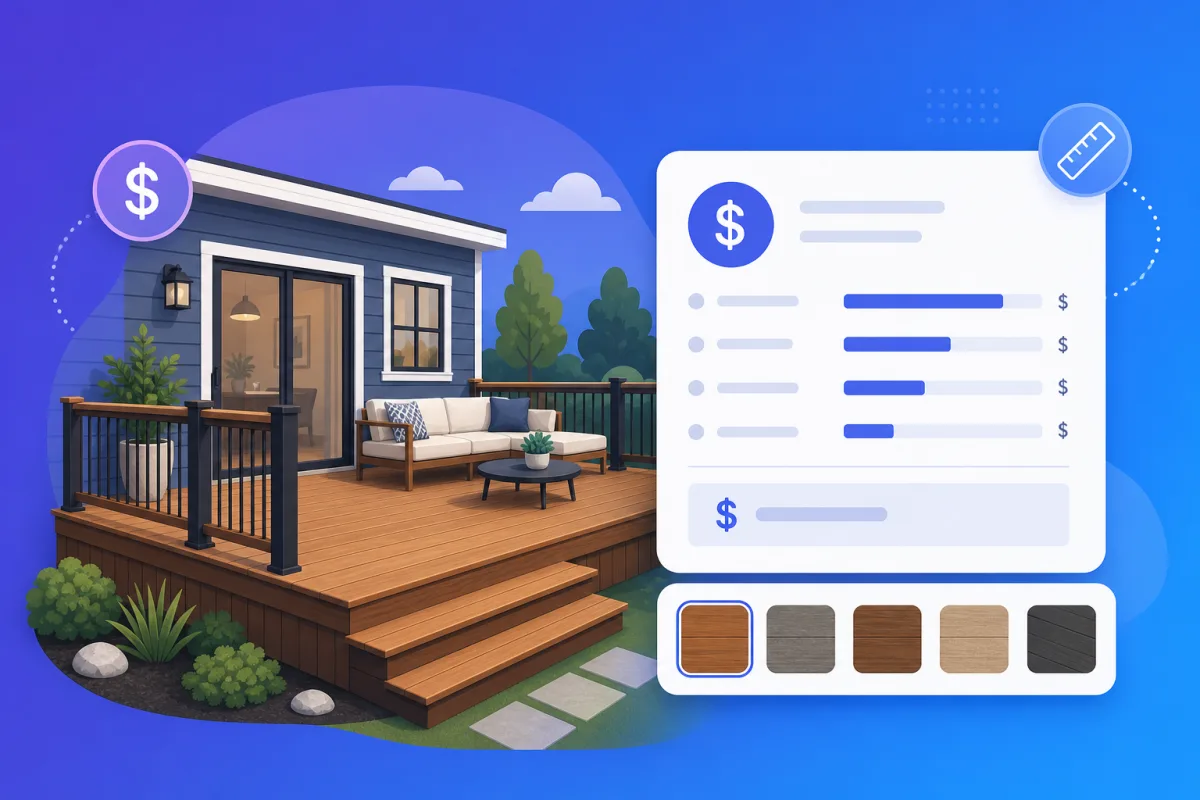
Deck Cost Calculator
Embed this calculator on your site
Add this calculator to your blog, landing page, or resource hub with responsive embed code. Include the optional attribution card to keep a source backlink for SEO trust signals.
1) Responsive iframe embed
Best for direct interactivity in modern layouts.
2) Minimal calculator + backlink
No heading/image text above widget. Only calculator area, result area, and attribution link.
What this deck cost calculator estimates
This deck cost calculator helps homeowners and remodelers frame the cost to build a deck before soliciting bids. It combines installed decking cost per square foot bands for common materials—pressure-treated lumber, composite, cedar, hardwood, and PVC—with an optional perimeter railing adder scaled to your deck footprint. Results are planning bands, not contractor quotes.
How deck size drives the number
Deck area is simply length × width in feet. A 16×12 deck is 192 sq ft of walking surface. Most installed pricing conversations start at dollars per square foot for decking boards, fascia, and typical fastening—then layer stairs, railing, lighting, and structural posts separately. This tool folds railing into a perimeter line item when you select Yes, which approximates guardrail on all four sides; real projects with open sides or multi-level layouts will differ.
Material tiers and what they imply
- Pressure-treated: Lowest upfront decking cost; requires periodic sealing or staining. Common for budget builds and ground-level platforms.
- Composite: Mid-to-upper installed band; lower maintenance, hidden-fastener aesthetics, and brand-driven price spread.
- Cedar and hardwood: Natural wood character with higher material and skilled-labor expectations; hardwood sits at the premium end.
- PVC: Synthetic capstock class with strong moisture resistance—often priced above composite in many markets.
The low–mid–high band captures scope variance (simple rectangle vs. picture framing, breaker boards, and premium fasteners), not a single SKU price list. Brand-name composite lines with 25-year fade warranties often quote above generic capped boards; cedar grades (clear vs. knotty) swing material cost before labor is applied. When you compare the scenario table rows, hold railing and regional index constant so you are isolating surface material—not mixing in stair upgrades.
Railing, footings, and code realities
Guardrails are typically required when the deck surface is more than 30 inches above grade, though local amendments vary. Railing cost scales with linear feet of perimeter, not deck area—so a long, narrow deck can carry more railing dollars per square foot than a square platform. Footings, ledger attachment to the house, frost depth, and engineered spans are not itemized here; they belong in structural plans and permit fees.
Posts set in concrete piers, helical piles, or on-grade blocks each carry different structural and labor stories. A ledger bolted to rim joists needs flashing and corrosion-resistant fasteners; missed flashing is a common moisture callback that does not show up in a surface-area calculator. Stairs add treads, stringers, and often a second railing run—budget them as adders when your platform is elevated.
Regional index and when to pad the mid
Labor and material indices move quotes between metros, coastal zones, and rural markets. Use the regional control as a coarse dial, then add contingency for demolition of an old deck, gas-line relocation, or HOA design review. Winter pours and supply-chain spikes can push a “mid” conversation toward the high band quickly.
Related outdoor and structure calculators
Pair deck planning with the concrete slab cost calculator for patio or footing pads, the wood fence cost calculator for yard enclosure, and the retaining wall cost calculator when grade changes affect your platform height. Whole-house scope may also reference the home addition cost calculator, while surface prep sometimes overlaps the pressure washing driveway cost calculator narrative for cleaning existing hardscape before a rebuild.
Getting contractor-ready numbers
Bring a simple sketch with dimensions, desired material class, stair count, and railing style to two or three licensed deck builders. Ask whether quotes include permits, disposal, and stainless or coated fasteners. Compare mid bands from this deck cost calculator to written proposals—not to big-box material calculators alone, which exclude labor and structure.
Request line items for demolition of an existing deck, new footings vs. reusing old piers, and lighting or post caps if you want them day one. Winter schedules in northern climates can add enclosure or heating surcharges for concrete. Document board direction, fascia color, and whether the quote uses square-edge or grooved hidden-fastener boards so bids are apples-to-apples.
Disclaimer
Educational planning only. Deck costs vary by structure type, soil, permits, and contractor backlog. Obtain written proposals from licensed contractors for your site and follow local building codes.